What Is an AI Health Passport?
An AI Health Passport is a personal health record that uses artificial intelligence to organize, interpret, and reason about your health data over time. Unlike traditional health records that simply store information, an AI Health Passport actively connects the dots between different health signals -- your symptoms, medications, lab results, wearable device data, and medical documents -- to surface patterns and insights that would be difficult to spot manually.
Think of it this way: a traditional health record is a filing cabinet. An AI Health Passport is a filing cabinet with a research assistant who reads everything inside it, remembers your history, and taps you on the shoulder when something looks worth paying attention to.
The concept is still emerging, but it represents a shift in how personal health data is managed -- from passive storage to active intelligence.

How Traditional Personal Health Records Work
Personal health records (PHRs) have been around for over a decade. Platforms like MyChart, Apple Health, and Google Health let patients access their medical information digitally. These tools have made real progress in giving patients visibility into their own data.
However, most traditional PHRs share a common limitation: they are organized around where your data comes from rather than what it means.
- MyChart connects to your healthcare provider's electronic health record (EHR). It shows you lab results, visit summaries, and messages from your doctor. But it is siloed to each health system -- if you see doctors at two different hospitals, your data lives in two separate MyChart accounts with no cross-referencing.
- Apple Health aggregates data from multiple sources -- your iPhone's step counter, connected apps, wearables, and some clinical records via FHIR integration. It does an excellent job of collecting data in one place. But it does not interpret what that data means in relation to your health history.
- Google Health has had multiple iterations, most recently focused on helping users organize their medical records. Like Apple Health, it consolidates data but does not apply reasoning across it.
These tools are valuable. They solved an important problem: giving patients access to their own data. But access alone is not enough when the volume of health data a person generates keeps growing.
What Makes an AI Health Passport Different
An AI Health Passport adds an intelligence layer on top of data storage. The key differences fall into a few categories:
1. Unified Timeline Instead of Separate Categories
Traditional PHRs organize information into tabs: medications here, lab results there, visit notes somewhere else. An AI Health Passport structures everything as a chronological timeline -- every symptom report, medication log, lab result, uploaded document, and wearable reading appears in context with everything else.
This matters because health events do not happen in isolation. A headache reported on Tuesday, a blood pressure reading from your wearable on Wednesday, and a medication change last month may all be related. A timeline-based approach makes these connections visible.
2. Cross-Signal Pattern Recognition
The most significant difference is the ability to correlate signals across different data types. An AI Health Passport can examine your wearable data (sleep quality, heart rate trends, activity levels), your self-reported symptoms, your medication adherence patterns, and your lab results -- then identify correlations that span these categories.
For example, the system might notice that your sleep efficiency has been declining over the past two weeks, your resting heart rate has trended upward during the same period, and you reported increased fatigue in your symptom journal. Individually, none of these might seem alarming. Together, they form a pattern worth discussing with your doctor.
3. Longitudinal Memory
Most health apps treat each interaction as independent. You describe symptoms today, get information, and start over next time. An AI Health Passport maintains a longitudinal memory -- a running summary of your health context that persists across sessions.
This means that if you reported knee pain three months ago and report it again today, the system understands this as a recurring issue rather than a new one. It can reference your history, note whether the frequency has changed, and factor in any treatments you tried in between.
4. Active Intelligence, Not Passive Storage
Perhaps the most fundamental shift: an AI Health Passport does not wait for you to ask questions. It proactively analyzes your data and generates insights when it detects something noteworthy. This could be a medication adherence pattern that has dropped below a threshold, a lab value that has been trending in a particular direction across multiple tests, or a correlation between a wearable metric and your symptom reports.
How Longitudinal AI Works in Health Records
The term "longitudinal AI" refers to artificial intelligence that reasons across time, not just within a single snapshot. In the context of a Health Passport, this involves several technical components:
Data Ingestion from Multiple Sources
A Health Passport collects data from diverse sources:
- Self-reported symptoms -- what you tell the system about how you feel
- Symptom journals -- structured daily or periodic check-ins tracking symptom severity, mood, and notes
- Medications -- your active prescriptions, dosages, and adherence logs
- Lab results -- blood work, urine tests, and other diagnostic results, either entered manually or parsed from uploaded reports
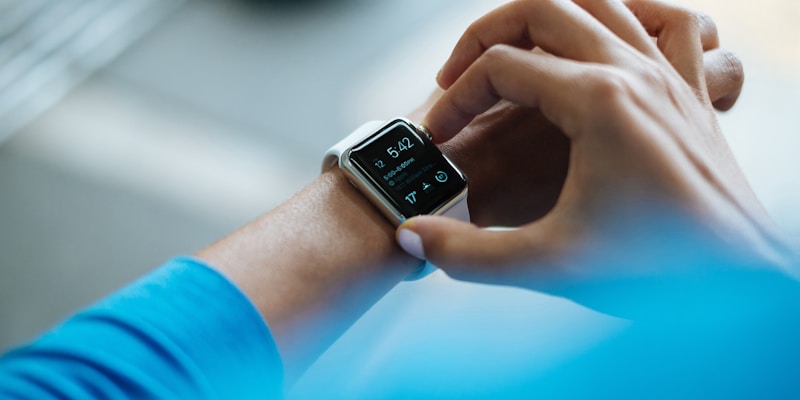
- Wearable data -- continuous biometric streams from devices like Fitbit, Oura Ring, or Whoop (sleep stages, heart rate, HRV, SpO2, activity)
- Medical documents -- uploaded PDFs, doctor reports, prescriptions, and imaging results
Each of these data types is stored as a timestamped event, creating a unified health timeline.
Context Building
Before the AI generates any insight or responds to a query, it builds a patient context -- a synthesized view that includes the most recent events, the running memory summary, active medications, and relevant history. This context is what allows the AI to reason about your health holistically rather than responding to isolated data points.
Cross-Signal Analysis
The AI examines data across signal types within a defined time window (typically the last 30 days). It looks for correlations -- for example, whether changes in sleep patterns coincide with symptom flares, or whether medication adherence drops correlate with worsening biometric readings. Each insight is tagged with the signal types it draws from (e.g., "wearable + symptom" or "medication + lab result") and assigned a confidence level.
Memory Summarization
To manage the growing volume of data without losing important context, the system periodically creates memory summaries -- compressed representations of your health history. These summaries capture the key facts (chronic conditions, medication history, recurring symptoms, notable events) without requiring the AI to re-read every data point from scratch.
Why Personal Health Records Need Intelligence
The volume of health data a person generates has increased dramatically. Between wearable devices producing continuous biometric streams, digital lab results, and the growing trend of patients actively tracking their symptoms, there is more data available than most people can meaningfully review.
Consider a person managing a chronic condition like diabetes or hypertension. They might have:
- Daily blood glucose or blood pressure readings
- Weekly wearable summaries (sleep, activity, heart rate)
- Monthly or quarterly lab results (HbA1c, lipid panels)
- Multiple active medications with varying adherence
- Occasional symptom flares that they may or may not remember to mention at their next doctor visit
No human -- patient or doctor -- can hold all of this in their head and spot every meaningful pattern. This is precisely where AI adds value: not by replacing clinical judgment, but by doing the tedious work of pattern detection across large volumes of time-series health data.
The goal is not to diagnose. It is to ensure that important signals do not get lost in the noise, and that patients arrive at their doctor's appointments with better-organized, more complete information.

Privacy Considerations for AI Health Passports
Any system that processes personal health data must take privacy seriously. This is especially true for AI-powered systems, where data is not just stored but actively analyzed. There are several important considerations:
Data Ownership
In an AI Health Passport model, the patient should own their data. This means the ability to export, delete, or revoke access at any time. Health data should not be monetized or shared with third parties without explicit consent.
Authentication and Access Control
Health records require strong authentication -- typically OAuth-based sign-in (like Google) combined with session-based tokens. Access should be scoped so that only the authenticated user can see their own timeline and insights.
AI Processing Boundaries
When AI analyzes health data, it is important to distinguish between on-device processing and cloud-based processing. Most current implementations use cloud-based AI models (like GPT-4) to perform the analysis, which means data leaves the user's device. Transparent communication about what data is sent, how it is processed, and how long it is retained is essential.
Regulatory Landscape
AI Health Passports operate in a complex regulatory environment. Depending on the jurisdiction, they may need to comply with HIPAA (United States), PDPA (Singapore and Southeast Asia), GDPR (European Union), or other data protection frameworks. The key principle across all of these is that health data deserves a higher standard of protection than general personal data.
The "Intelligence vs. Privacy" Balance
There is an inherent tension between AI intelligence and data minimization. More data enables better insights, but it also increases the privacy surface area. Good implementations address this by being transparent about data usage, giving users granular control over what is tracked, and processing data with clear purpose limitations -- analyzing your health patterns for your benefit, not for advertising or third-party analytics.
What an AI Health Passport Is Not
It is equally important to define what an AI Health Passport should not be:
- It is not a diagnostic tool. AI Health Passports surface patterns and correlations. They do not replace a doctor's clinical judgment or provide medical diagnoses.
- It is not an EHR replacement. Electronic health records used by hospitals and clinics serve a different function -- they are designed for clinical workflows, billing, and care coordination. An AI Health Passport is a patient-facing complement, not a replacement.
- It is not a one-time snapshot. The value of longitudinal AI compounds over time. A Health Passport with one week of data is useful. One with six months of data is significantly more useful. The intelligence improves as your health timeline grows.
The Future of AI-Native Health Records
The concept of an AI Health Passport is part of a broader trend toward AI-native applications -- software designed from the ground up with AI as a core component, rather than AI bolted onto an existing product.
As wearable devices become more ubiquitous, as more lab results become available digitally, and as patients become more comfortable tracking their health data, the amount of information available for longitudinal analysis will continue to grow. The challenge will not be collecting data -- it will be making sense of it.
AI Health Passports represent one approach to this challenge: giving individuals an intelligent, persistent, and privacy-respecting record of their health that works for them between doctor visits, not just during them.
Disclaimer: This article is for informational purposes only and does not constitute medical advice. AI health tools are designed to complement, not replace, professional medical care. Always consult a qualified healthcare provider for medical decisions.


