More Than a List of Possible Conditions
Most symptom checkers give you a list of conditions that might match your symptoms. You are left staring at five or six possibilities with no sense of which is most likely, what to do next, or whether you should be worried.
Symplicured takes a fundamentally different approach.
After guiding you through a conversational assessment — asking clinically relevant follow-up questions the way a doctor would — the system generates a structured diagnostic report that gives you actionable clarity, not just a list of maybes.
What Your Report Includes
Every Symplicured health report is designed to answer the questions that matter most when you are worried about a symptom: What is it likely to be? How serious is it? What should I do?
Top Diagnosis with Confidence Score
The report leads with the most likely condition based on your symptoms, demographic profile, and conversation history. Each diagnosis includes:
- A confidence percentage — A clear visual indicator showing how closely your symptoms match the condition
- Confidence level — Labelled as High, Moderate, or Low so you can quickly gauge reliability
- Matched symptoms — The specific symptoms you reported that align with this diagnosis, displayed as individual badges
This is not guesswork. The confidence score is derived from multi-model AI reasoning that cross-references your symptoms against clinical databases and validated medical pathways.
Why This Matches
Every diagnosis includes a plain-language explanation of why the AI reached this conclusion. This is not a black box. You can read exactly which aspects of your reported symptoms, their duration, their severity, and your profile led to this assessment.
Understanding the reasoning helps you evaluate the result yourself and prepare better questions for your healthcare provider.
Do This Now
Immediate, practical care steps you can take right away. These are the actions that make sense before your next doctor's visit — things like:
- Rest and hydration recommendations
- Over-the-counter remedies that may help
- Self-care measures specific to your likely condition
- Monitoring instructions (what to watch for)
Each step is presented clearly and concisely — no medical jargon, no ambiguity.
See a Doctor If
This is one of the most important sections of the report. It lists the warning signs and escalation criteria that should prompt you to seek professional medical attention. For example:
- Symptoms that worsen beyond a certain threshold
- New symptoms that develop alongside existing ones
- Duration markers (e.g., "if the fever persists beyond 3 days")
- Red-flag symptoms that require immediate care
This section is deliberately highlighted with a distinct visual treatment so it is impossible to miss. The goal is to make sure you know exactly when self-care is no longer enough.
Which Doctor to See
Not sure what kind of specialist handles your condition? The report recommends the type of doctor or specialist most relevant to your assessment — whether that is a dermatologist, orthopedist, gastroenterologist, or general practitioner.
This simple detail eliminates the confusion of not knowing where to start when you decide to seek professional care.
Recommended Tests and Check-Ups
Based on the assessment, the report suggests specific tests or examinations that a doctor might order to confirm or investigate the diagnosis further. This could include:
- Blood work (e.g., CBC, thyroid panel)
- Imaging (X-ray, MRI, ultrasound)
- Physical examinations
- Specialist consultations
Having this information before your appointment helps you have a more informed, efficient conversation with your doctor.
Differential Diagnosis: The Full Picture
Beyond the top diagnosis, the report shows up to three additional conditions that could match your symptoms, each with their own confidence percentage. This differential diagnosis mirrors how doctors think — considering multiple possibilities and ranking them by likelihood.
If more than three conditions are identified, you can expand the list to see all of them. Each alternative includes a probability score so you can understand how the possibilities relate to each other.
Advanced Analysis: Multi-Model Consensus
For users who want the highest level of diagnostic confidence, Advanced Analysis mode goes a step further.
Instead of relying on a single AI model, Advanced Analysis runs your symptoms through multiple independent medical AI providers simultaneously. The system then:
- Collects each provider's independent assessment
- Compares and cross-references the results
- Generates a consensus diagnosis — selecting the most reliable conclusion and explaining why it was chosen
- Provides an inference summary that details the reasoning behind the consensus
This multi-model approach reduces the risk of any single AI's blind spots and produces the most robust assessment possible. It is the difference between getting one doctor's opinion and getting a panel's consensus.
Advanced Analysis sessions are included in Pro and Hospital plans, with a limited number available on the free Starter plan.
Download Your Doctor-Ready PDF
Every diagnostic report can be downloaded as a professional PDF that you can share with your healthcare provider. The PDF includes:
- Full Q&A transcript — Every question and answer from your assessment
- Demographic context — Age, gender, ethnicity (as provided during assessment)
- SOAP note — A structured clinical note formatted in the standard Subjective, Objective, Assessment, Plan format that doctors use
- Top diagnoses with confidence scores
- Care steps and recommendations
- Date and timestamp
This is not a casual summary — it is a clinically structured document designed to slot directly into a medical consultation. Doctors receive the context they need without you having to recall every detail from memory.
Your Reports, Saved and Organised
Every assessment you complete is saved to your Health Passport — your personal, encrypted health profile on Symplicured. From there, you can:
- Review past reports and track how symptoms evolved over time
- Compare assessments to spot patterns in your health
- Access documents you have uploaded alongside your AI reports
- Share reports with any healthcare provider you choose
Your health data stays under your control. You decide who sees it, and you can delete it at any time.
Why This Approach Works
Traditional symptom checkers stop at "here are some conditions that might match." Symplicured continues the journey:
- Tells you the most likely condition — with a transparent confidence score
- Explains why — so you understand the reasoning
- Tells you what to do now — practical, immediate care steps
- Tells you when to escalate — clear warning signs to watch for
- Tells you which doctor to see — so you know where to go
- Gives you a document to bring — a PDF your doctor can actually use
The result is not just information — it is a care pathway that guides you from uncertainty to action.
Try It Yourself
- Visit symplicured.com/chat
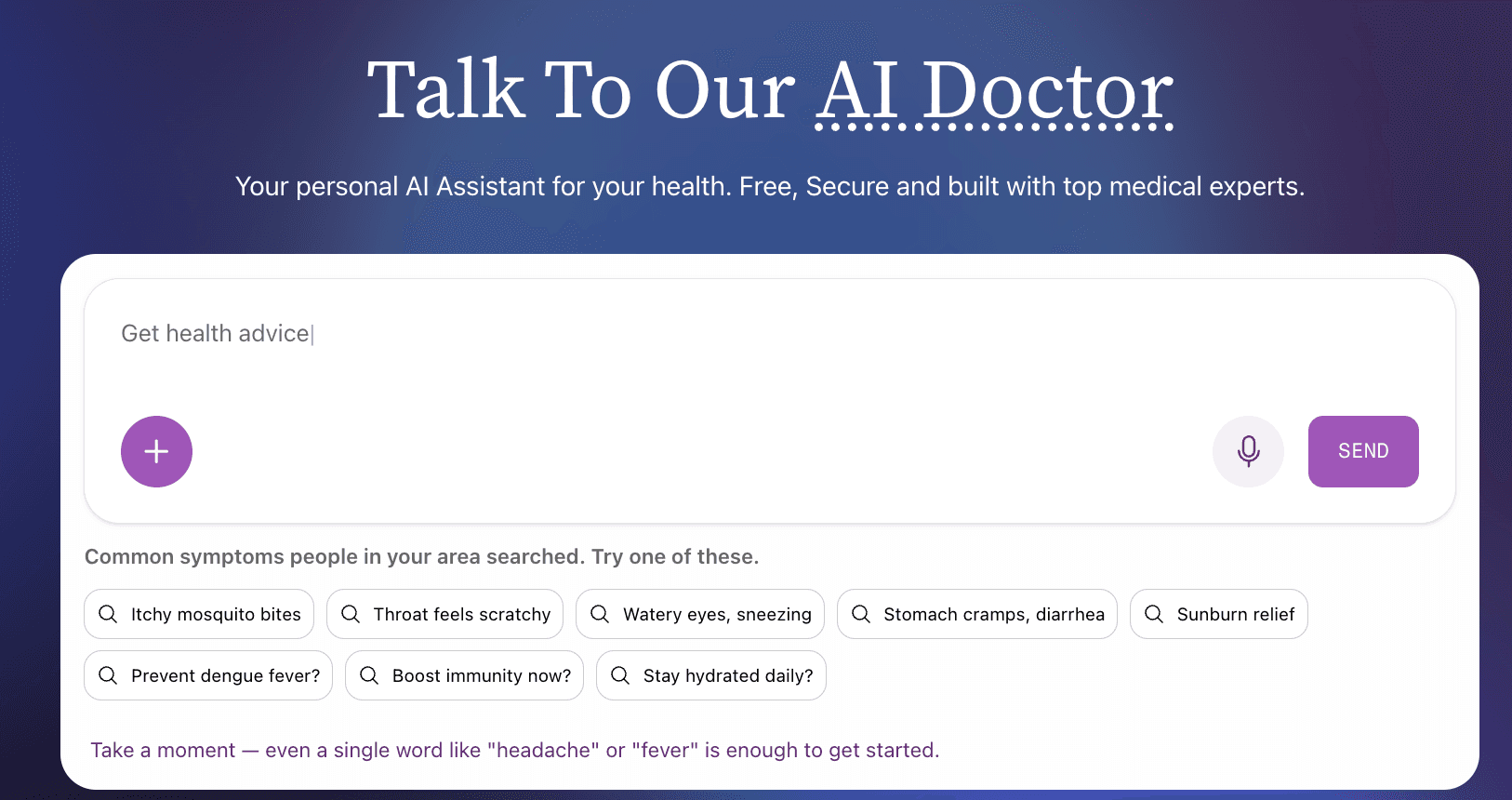
- Describe your symptoms — by typing, speaking, or uploading an image
- Answer the AI's follow-up questions
- Receive your full diagnostic report with confidence scores and care steps
- Download the PDF and bring it to your next doctor's visit
Your symptoms deserve more than a list of guesses. They deserve a clear answer, a plan of action, and a document you can take to your doctor.
Symplicured's AI diagnostic reports give you confidence scores, actionable care steps, specialist recommendations, and downloadable PDFs — everything you need to take the next step with clarity. Get your report now.