Perte de poids inexpliquée : causes et quand s'inquiéter
Perdre du poids sans le chercher est un symptôme qui nécessite d'agir, pas d'attendre. Les causes, de la maladie thyroïdienne au cancer, l'exception des GLP-1, et quand consulter un médecin.
Expert articles on AI in healthcare, patient education, and digital health innovation
Perdre du poids sans le chercher est un symptôme qui nécessite d'agir, pas d'attendre. Les causes, de la maladie thyroïdienne au cancer, l'exception des GLP-1, et quand consulter un médecin.
La plupart des oppressions thoraciques ne sont pas des crises cardiaques. Voici les huit causes non cardiaques, les signes d'alarme cardiaques nécessitant une prise en charge urgente, et comment les distinguer.
Kidney disease is silent until it's advanced. Who's at risk, the three simple tests that catch it early, and what early detection changes.
Des analyses de sang normales ne signifient pas toujours que vous êtes en bonne santé. Ce que les bilans standards ne détectent pas, les examens à demander nommément, et comment défendre votre droit à une investigation approfondie.
L'été améliore souvent le psoriasis, mais août apporte un ensemble particulier de déclencheurs. Ce qui provoque la poussée, ce qui aide vraiment, et quand consulter un dermatologue.
Douleurs articulaires, brouillard mental, anxiété, palpitations cardiaques. Ce sont des symptômes de la périménopause que la plupart des femmes et de nombreux médecins ne relient jamais aux hormones. Voici ce qu'il faut surveiller et que faire.
Le formulaire scolaire demande quels vaccins votre enfant a reçus, et vous n'en êtes pas sûr. Voici la liste complète par âge, pour les enfants et les adultes, ainsi que les nouveautés pour 2026.
August is peak monsoon illness season. Here is the medicine cabinet checklist, the water and food safety rules that matter most, and the red flags that mean hospital now.
La créatine a discrètement dépassé le cadre de la salle de sport. La recherche couvre désormais la cognition chez les personnes âgées, la perte musculaire à la ménopause et l'humeur. Voici ce que les preuves montrent réellement, évaluées honnêtement.
Le coup de chaleur et l'épuisement par la chaleur ne sont pas la même chose. L'un se traite à domicile, l'autre nécessite une ambulance. Voici comment les distinguer et agir vite.
Si vous prenez Ozempic, Wegovy ou Mounjaro, votre médicament modifie discrètement la façon dont votre corps gère la chaleur et la soif. Voici ce qui se passe, les signes d'alerte et comment rester en sécurité cet été.
La peur des douleurs musculaires prive des millions de personnes des statines. Une nouvelle recherche d'Oxford a révélé que plus de 98 % des patients éligibles présentent un faible risque de problèmes musculaires graves. Voici ce que cela signifie pour vous.
Dengue used to arrive with the rains. Not any more. What families in India, Singapore, and Latin America need to know in 2026: symptoms, warning signs, tests, and prevention.
Les capteurs de glycémie en continu et les wearables métaboliques et hormonaux sont omniprésents en 2026, mais le marketing devance largement les preuves. Un regard honnête sur ce qu'ils mesurent vraiment et quand leurs données sont utiles.
India gets some of the world's most generous sunshine, yet up to 90% of people are deficient in vitamin D. The hidden barriers, the symptoms to watch, and how to fix it safely.
La plupart des recherches sur la santé commencent sur Google, mais peu de sources sont dignes de confiance. Comment trouver des informations médicales fiables, évaluer une source et savoir quand consulter un professionnel de santé.
Les données médicales brutes seules n'améliorent pas les résultats. Voici comment les analyses de données de santé transforment des informations fragmentées en meilleures décisions cliniques et opérationnelles.
Les examens standards traitent tout le monde de la même façon. Les bilans de santé personnalisés exploitent votre biologie, votre mode de vie et vos risques propres pour détecter les problèmes précocement. Ce qu'ils comprennent et comment en choisir un.
L'American Cancer Society inclut désormais une analyse sanguine dans ses recommandations de dépistage du cancer colorectal. Un guide en langage clair sur toutes les options en 2026 : FIT, Cologuard, coloscopie et le nouveau test Shield.
Les médicaments GLP-1 comme Ozempic et Wegovy sont partout, mais que font-ils réellement à votre corps ? Un guide en langage clair sur la science, les effets secondaires et ce à quoi s'attendre concrètement.
Environ 90 % de la sérotonine de votre corps est produite dans votre intestin, et non dans votre cerveau. Un guide en langage clair sur l'axe intestin-cerveau : ce que c'est, ce que la recherche montre et ce qui aide vraiment.
Fatigue, brouillard mental, prise de poids, humeur basse : ce pourrait être une maladie thyroïdienne, une dépression ou une carence en fer. Ou simplement un mauvais sommeil. Voici comment faire la différence.
Les barrières linguistiques dans les soins de santé entraînent de véritables erreurs diagnostiques. Un guide pratique pour les patients dont la langue maternelle est différente : comment se préparer, communiquer clairement et utiliser l'IA pour combler le fossé.
Late spring in the South Bay stacks pollen, screen time, dry indoor air, and the start of wildfire-season AQI vigilance. Here's how to untangle the symptom cluster.
Late May in the DMV combines peak grass pollen with peak tick season. The symptoms overlap. Here's how to tell allergies from early Lyme disease.
By late May, Phoenix is already in dangerous-heat territory. A clear guide to spotting heat exhaustion early, recognizing heat stroke, and knowing when to call 911.
毎年7万人以上が救急搬送される熱中症。重症化する前に気づくべき初期症状、高齢者や子供で注意すべきサイン、家庭での応急処置と救急車を呼ぶべきラインを徹底解説します。

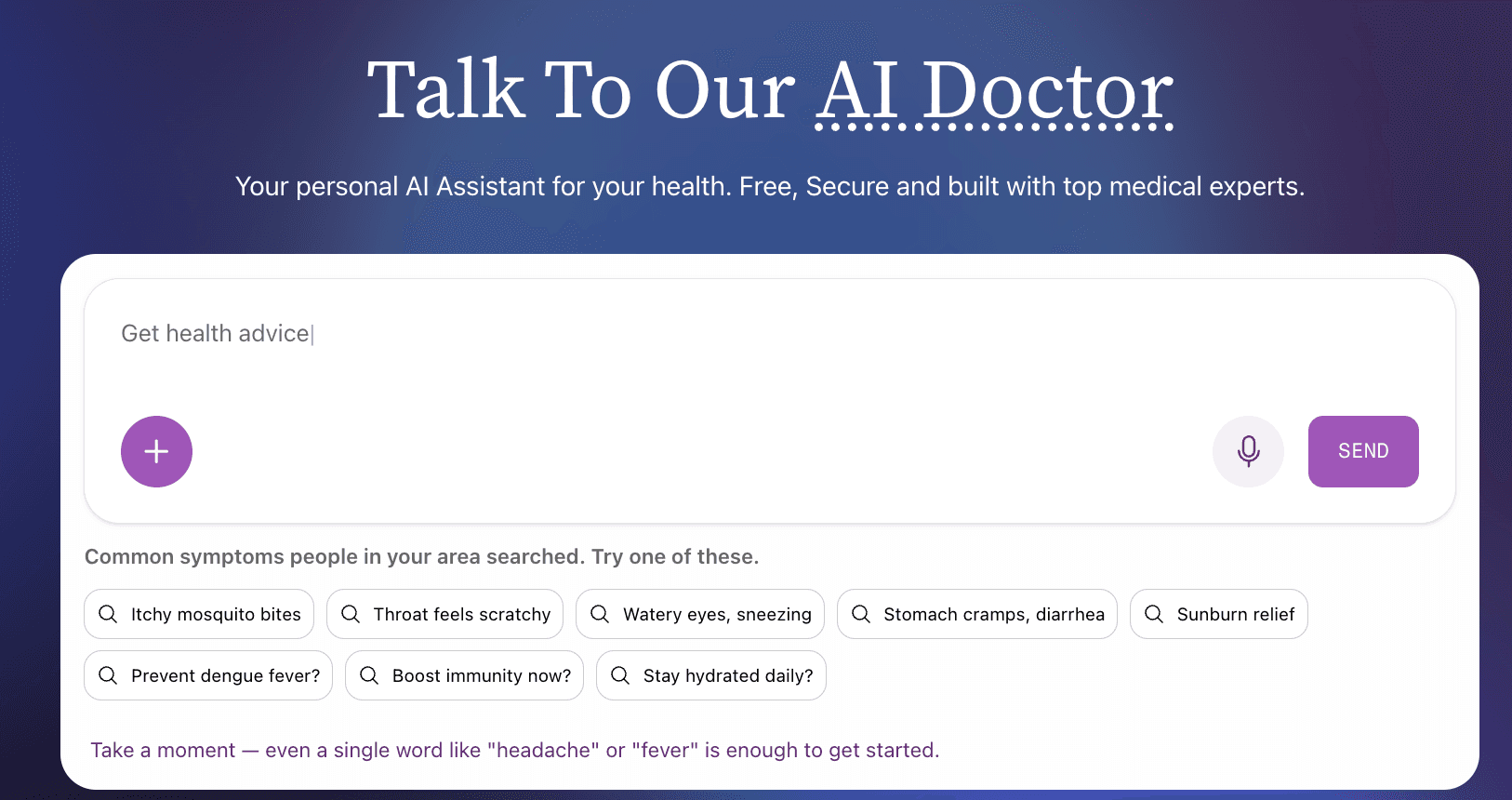
The Symplicured home page now greets you with symptom suggestions tuned to your city, the current season, and what people nearby are actually searching for. No more generic pills — just a faster, more relevant way to start a health check.
「ただの疲れ」と片付けていませんか?OECD最下位の睡眠時間を抱える日本人に多い慢性疲労。鉄欠乏、甲状腺、睡眠時無呼吸、うつ——疲労感の裏に潜む病気のサインを解説します。
Over 200 million people worldwide have thyroid disorders, yet most cannot interpret their own test results. This guide explains TSH, Free T4, Free T3, and thyroid antibodies in plain language.
High blood pressure affects 1.3 billion people worldwide and is the leading risk factor for heart disease and stroke. These 10 scientifically proven methods can help lower your blood pressure without medication.
Perimenopause Isn't What You Think: The 12 Symptoms Most Women (and Their Doctors) Miss
Over 380 million people worldwide have prediabetes, and most do not know it. Learn the warning signs, understand your blood sugar numbers, and discover evidence-based steps to prevent type 2 diabetes.
Iron deficiency is the most common nutritional deficiency worldwide, affecting over 1.6 billion people. Learn the symptoms, which blood tests to request, and how to interpret your results.
From diagnosis and drug discovery to patient triage and personalised treatment, AI is reshaping every corner of healthcare. Here is where things stand in 2026 and what comes next.
Googling symptoms leads to anxiety and misinformation. AI symptom checkers offer a structured, evidence-based alternative. Here is why the way you search for health information matters.
MRI reports are filled with complex medical terminology. This guide explains common MRI findings, what the key terms mean, and how to make sense of your results before your follow-up appointment.
AI health apps are everywhere — but how do you choose the right one? This guide explains the key features that separate genuinely useful health AI from marketing hype.
Preventive screening catches problems before symptoms appear. This guide covers every recommended health test from your 20s through your 60s and beyond — based on USPSTF, CDC, and ACS guidelines.
Prescriptions are full of Latin abbreviations and medical shorthand. This guide decodes every common abbreviation — from QD to PRN to BID — so you can understand exactly what your doctor prescribed.
A well-prepared patient gets better care. This checklist covers everything you should gather, write down, and bring to your next doctor's appointment — including how AI tools can help.
High cholesterol affects over 100 million adults, yet most people cannot explain what their numbers mean. This guide breaks down LDL, HDL, triglycerides, and total cholesterol in plain language.
Most people only think about their health when something goes wrong. Tracking key health metrics over time catches problems early, reveals patterns, and puts you in control of your health journey.
EHRs belong to your doctor. Personal health records belong to you. Understanding the difference — and using both — gives you a complete picture of your health that no single system can provide.
Taking multiple medications increases the risk of dangerous drug interactions. Learn what drug interactions are, which combinations to watch for, and how AI tools can help you stay safe.
ほてり、動悸、不眠、気分の落ち込み——「年齢のせい」と諦めていませんか?更年期障害の典型的な症状、甲状腺疾患・うつ病との見分け方、婦人科を受診するタイミングを解説します。
Symplicured's new adaptive questioning engine can now detect high-confidence diagnoses early and give you the choice to see results sooner — or continue for even better accuracy.
We've redesigned our AI thinking indicator to show you exactly what's happening as our engine analyzes your symptoms — no more generic loading spinners.
PostVisit.ai is a new AI health chat experience built into Symplicured. Unlike generic chatbots, it has full context of your vitals, lab results, medications, and visit summaries — so every answer is personalised to your health profile.
You can now share your complete Health Passport with anyone — doctors, family, or caregivers — using a secure link or QR code. Built with GDPR Article 9(2)(a) consent, viewer privacy controls, and automatic expiry.
Your downloadable Health Passport PDF now includes comprehensive vitals tables, colour-coded lab results with reference ranges, full visit summaries with SOAP notes, and BMI calculations — all professionally formatted and ready for your doctor.
Symplicured now translates your entire health report into 16 languages using AI — while keeping original English medical terminology alongside translations for clinical safety. Your doctor reads the local language; the medical terms stay universal.
「病院に行くほどではないけど、なんだか調子が悪い」——その不調、仕事のストレスが原因かもしれません。自律神経の乱れ、うつ病の初期サイン、相談先まで、働く日本人のための完全ガイド。
A virtual health consultation is more than a video call. The best outcomes happen when patients prepare with organized symptom histories, providers have access to complete health context, and follow-up monitoring continues between visits. Here is what the full process looks like.
Telemedicine has moved far beyond simple video calls with a doctor. Today it includes asynchronous messaging, AI-powered triage, remote patient monitoring through wearables, and intelligent health records that follow patients between visits. Here is how the full spectrum of telemedicine works.
Not all online medical advice is created equal. The spectrum ranges from unverified forum posts to AI-powered health guides to licensed telehealth consultations. Understanding where different sources fall on the reliability scale helps you make better decisions about your health.
Personal health records have existed for years, but most are little more than digital filing cabinets. An AI Health Passport changes this by applying longitudinal intelligence to your health data -- connecting symptoms, medications, lab results, and wearable signals into a living, reasoning record.
Most health apps show you a snapshot. AI pattern detection looks at the full movie -- connecting your medication logs, lab trends, wearable biometrics, and symptom reports across weeks and months to surface correlations that single-point-in-time analysis would miss entirely.
Traditional symptom checkers follow rigid decision trees -- you pick from a list, answer yes/no questions, and get a list of possible conditions. AI health guides take a fundamentally different approach: conversational, context-aware, and capable of processing text, voice, and images.
スギ、ヒノキ、ブタクサ——日本人の約4割が悩む花粉症。風邪との見分け方、季節別の花粉カレンダー、受診すべきタイミングまで、症状から原因を見分ける完全ガイドをまとめました。
After receiving your AI-powered diagnosis, you can now share a beautifully formatted health report card with your doctor, family, or anyone you trust — instantly via WhatsApp or a secure copy link.
Symplicured does not just list possible conditions — it tells you how confident it is, what to do right now, when to see a doctor, and which specialist to visit. And you can download the whole report as a PDF.
Your health is more than a single check-up. With Symplicured's new Wellness Score ring and Health Streaks counter, you can now visualise your health engagement and build habits that last.
Lab reports, prescriptions, symptoms, medications, wearable data — your health information finally has a home. Meet the Symplicured Health Passport, your personal health record that travels with you.
Typing out your symptoms is not always the easiest option. Now you can talk to Symplicured — literally. Our voice-powered AI listens, understands, and responds naturally, just like a conversation with a doctor.
Symplicured now analyses your health data in the background and sends you personalised alerts when something needs your attention — from medication reminders to early warning signals based on your health patterns.
Your health data lives in many places — your phone, your fitness tracker, your email, even paper documents. Symplicured's new Health Import feature brings it all together in one place.
Symplicured now supports instant AI analysis of X-rays, MRI scans, blood test reports, prescriptions, and more. Upload a photo or PDF and get clear, understandable insights in seconds.
Not sure what a medication does, its side effects, or how to take it properly? Symplicured's new Scan Label feature lets you point your camera at any medication and get instant, clear information.
Blood test results are packed with numbers, abbreviations, and reference ranges that can feel impossible to decode. Here is how AI is making lab reports understandable for everyone.
Radiology reports are written for doctors, not patients. Learn how AI is helping people understand their X-ray and MRI results, and why that understanding matters.
Artificial intelligence is revolutionizing how we approach early diagnosis. Learn how AI symptom checkers are helping millions identify health concerns faster and more accurately than ever before.
Language should never be a barrier to receiving quality healthcare. Discover how multilingual health technology is making medical information accessible to everyone, regardless of the language they speak.
Not every symptom requires an emergency room visit, but some should never be ignored. Learn how to use digital health tools wisely alongside professional medical care.
From remote diagnosis to language translation, AI is removing barriers that have long prevented equitable healthcare access. Here are five transformative ways AI is democratizing health.
Telemedicine has evolved from simple video calls to AI-powered health platforms. Explore how AI-driven assessments are shaping the next generation of remote healthcare.
Text descriptions only tell part of the story. Learn how multimodal AI — combining text, voice, and image analysis — creates a more complete picture of your health.